 By David Barbour
photography by Steve Jennings & Josh Withers
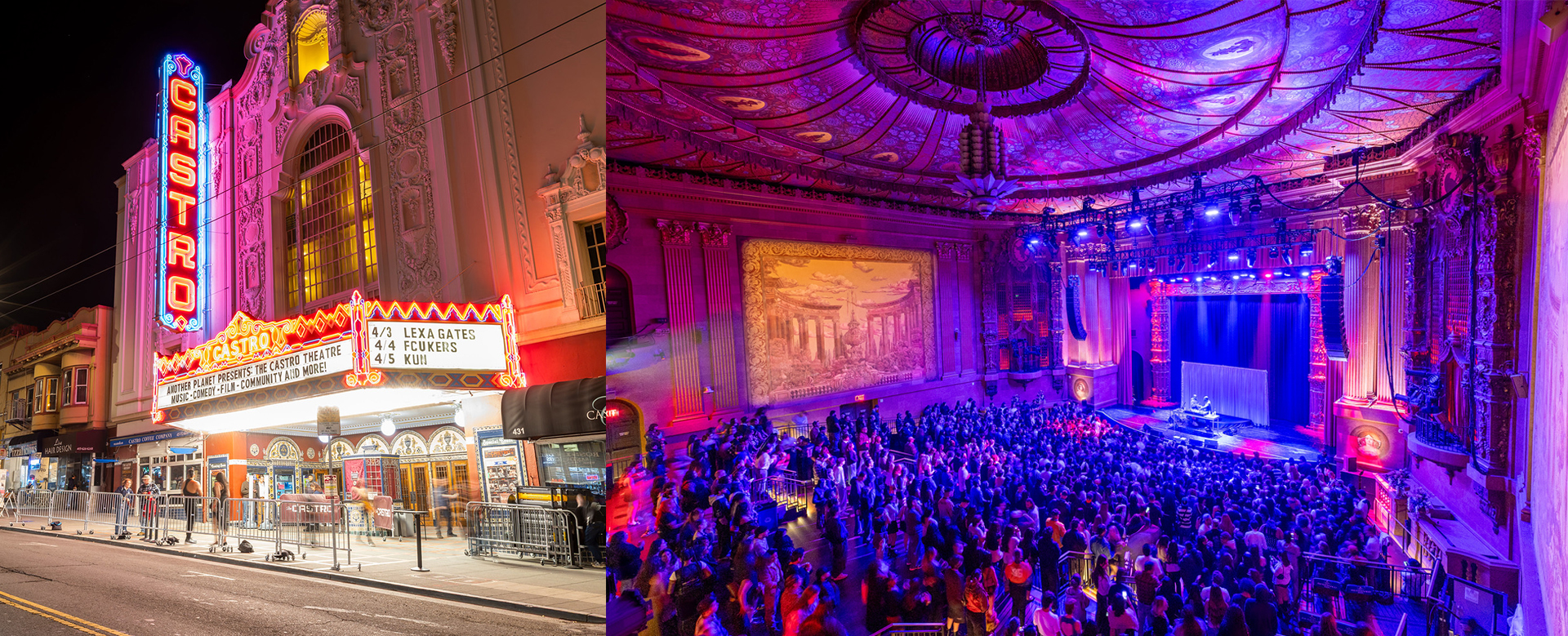
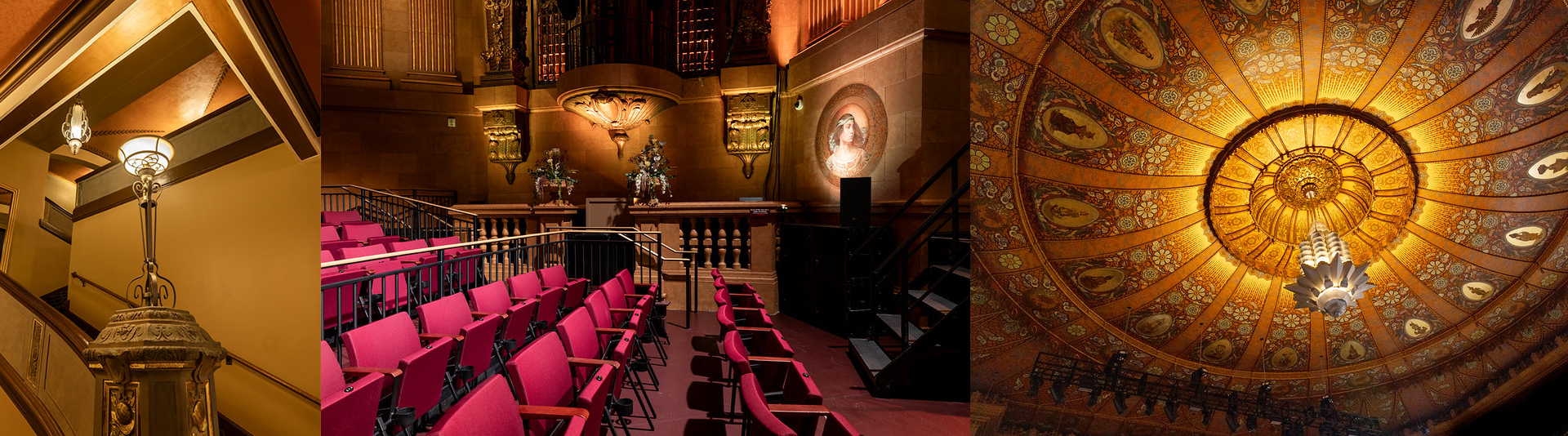
A storied San Francisco landmark has entered a new stage of its storied existence. The Castro Theatre, a San Francisco movie palace and an anchor of the city's gay neighborhood, has reopened after an extensive renovation, outfitted for both live and cinematic entertainment. Owned by the Nasser Family, the Castro, which opened in 1922, was designed by Timothy L. Pflueger, a prominent San Francisco architect whose extensive portfolio includes several other cinemas in the Bay Area, including the Paramount Theatre in Oakland. Built for $300,000, a substantial sum at the time, the Castro reflects a Spanish Baroque influence.
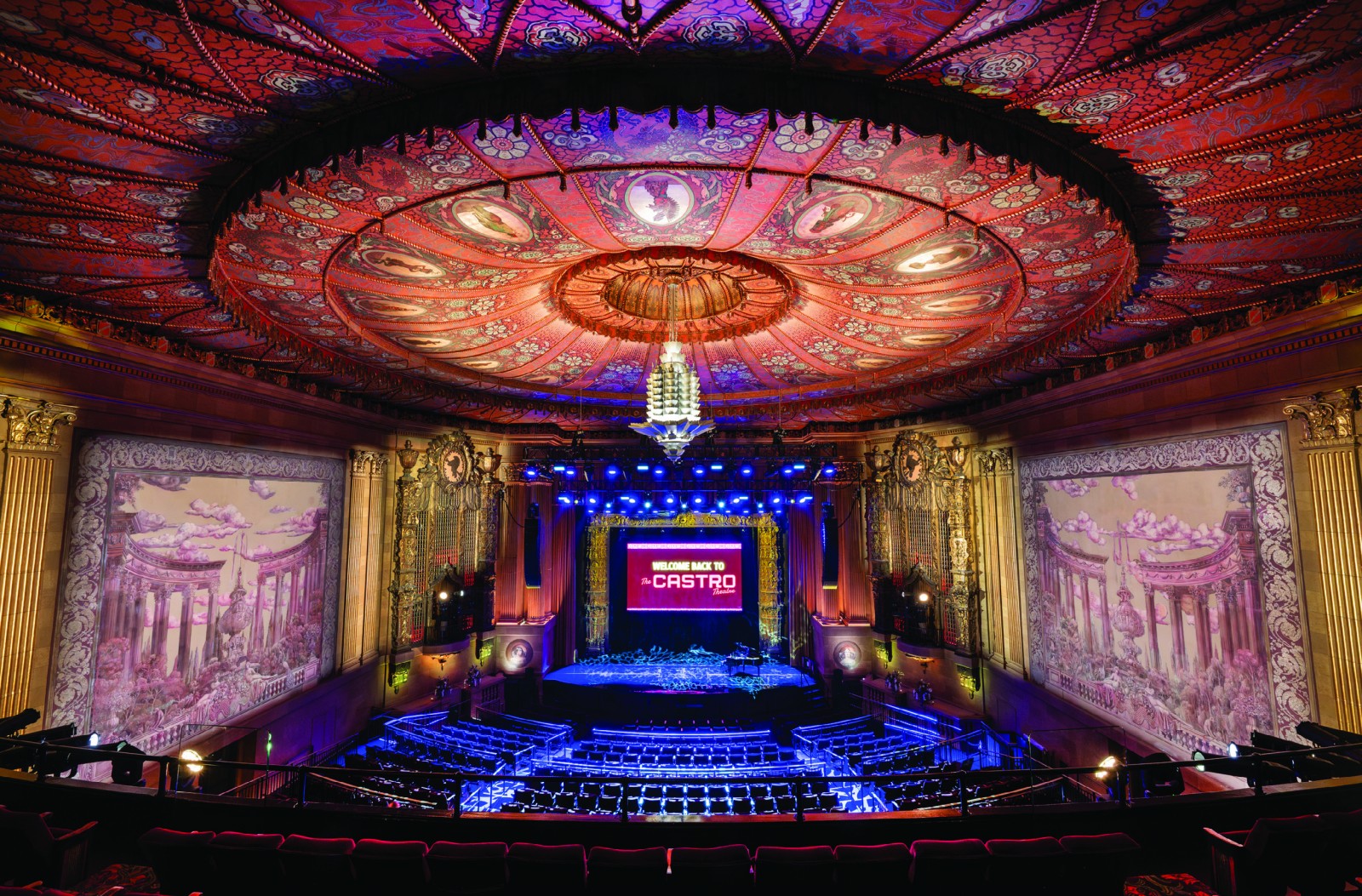
According to Architectural Record, the "eclectic work includes a Spanish baroque facade, Italian Renaissance murals, and an ornate plaster ceiling whose shape evokes a Roman canopy and whose painting was, according to Pflueger, 'inspired by ancient priest robes and cloths for which every oriental shop in San Francisco was scoured'." Opening with the Wallace Reid vehicle Across the Continent, the Castro survived Hollywood's Golden Era even as other palaces fell into decay, reinventing itself as a home for repertory cinema and festivals.
Now managed by the concert promoter Another Planet Entertainment (APE), which operates multiple venues in the Bay Area and Sacramento, the renovation, which cost $41 million and was paid by APE, includes a new seating scheme; gorgeously restored ceiling, murals, and plasterwork; restored architectural lighting fixtures; new HVAC systems; a new film screen; and improved access. Reinvented as a venue for live performance and film, it also has updated rigging and new lighting, audio, and video systems.
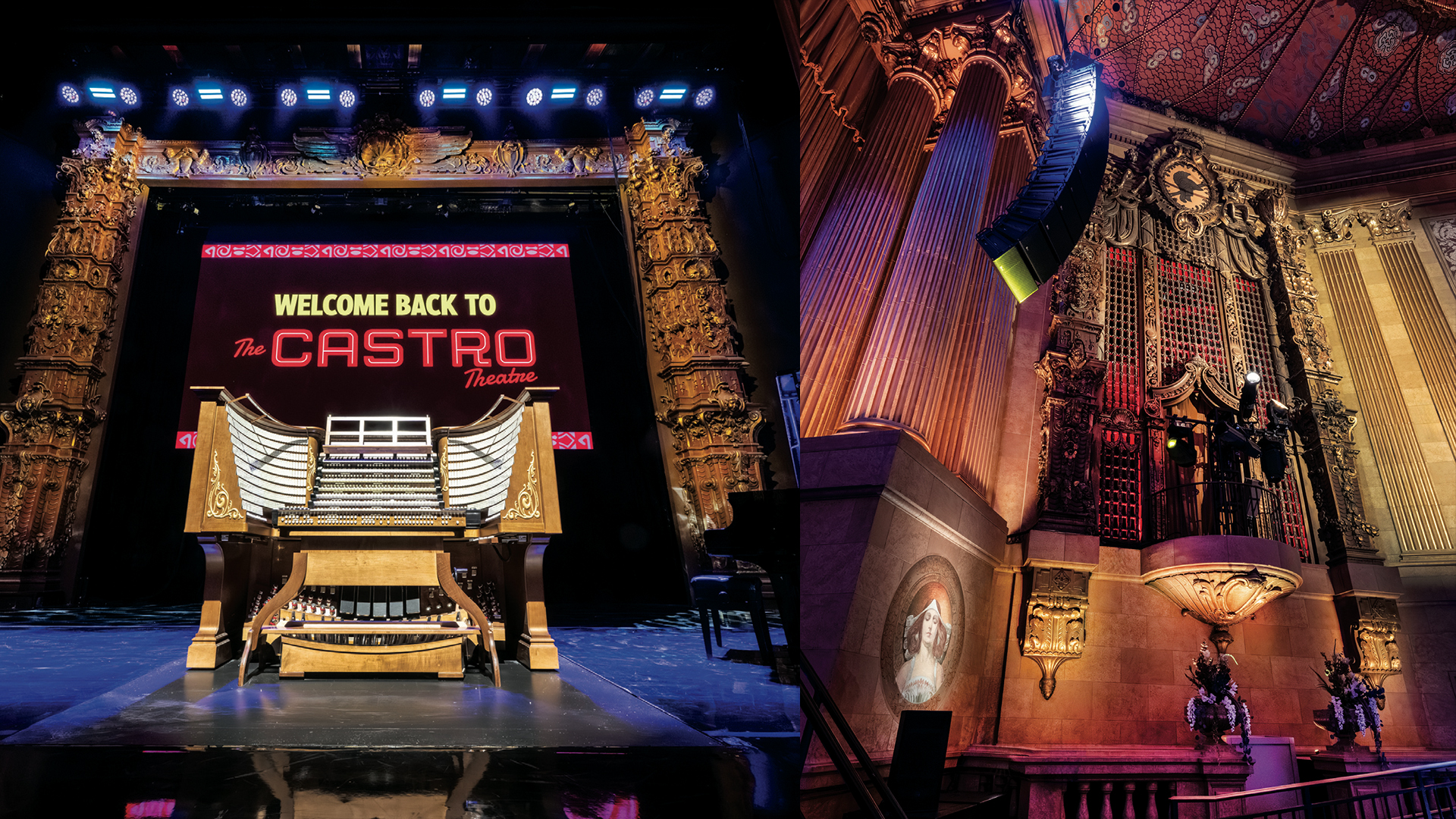
(The recent schedule includes screenings of Grease and Project Hail Mary as well as the San Francisco Silent Film Festival and live appearances by the Indigo Girls and Mika. Sam Smith kicked off the live event lineup with a sold-out 20-show residency.) The Castro is also getting a stunning new organ, described by the Castro Organ Devotees Association as "a magnificent 400-rank theatre/classical hybrid with a full piano-length keyboard and a comprehensive orchestral sound library. Seven manuals will make it the largest (fully working) console in the world. It will be unlike any instrument of its kind—capable of authentically representing the theatre organ, the symphonic organ, the classical organ, and the symphony orchestra."
The project was helmed by the local firm CAW Architects with contributions from the historic preservation architecture firm Paige & Turnbull, theatre/AV consultancy The Shalleck Collaborative, acoustician firm Salter, lighting design company Lightswitch, AV specialist Coda Technology Group, audio gear supplier UltraSound, preservation experts EverGreene Architectural Arts, engineering firm Meyer+ Engineers, and Las Vegas-based Protech Stage Rigging and Automation.
It was, to say the least, a delicate endeavor, especially since the building was landmarked in 1976. New rooftop HVAC units were introduced to meet the demands of a live music venue, marking the first time in its history that the Castro Theatre has ever been fully air-conditioned. Rather than penetrating the theatre's historic interior walls, MEYERS+ designed a routing strategy that runs supply ducts down the exterior of the building before re-entering beneath the floor. This approach preserved architectural finishes while delivering modern climate control performance essential for audience comfort and equipment reliability.
"The transition to a live performance venue required substantial electrical upgrades to support high-capacity sound, lighting, and production systems. Similar to the HVAC solution, new power conduits were strategically routed along the building's exterior to the roof—minimizing invasive impacts to historic elements. To support the additional weight of upgraded speakers, lighting arrays, and rigging systems, a new structural steel frame was introduced at the roof level. This frame connects to the building's exterior walls and existing long-span trusses, penetrating into the attic to carry suspended production loads safely and efficiently."
The Auditorium
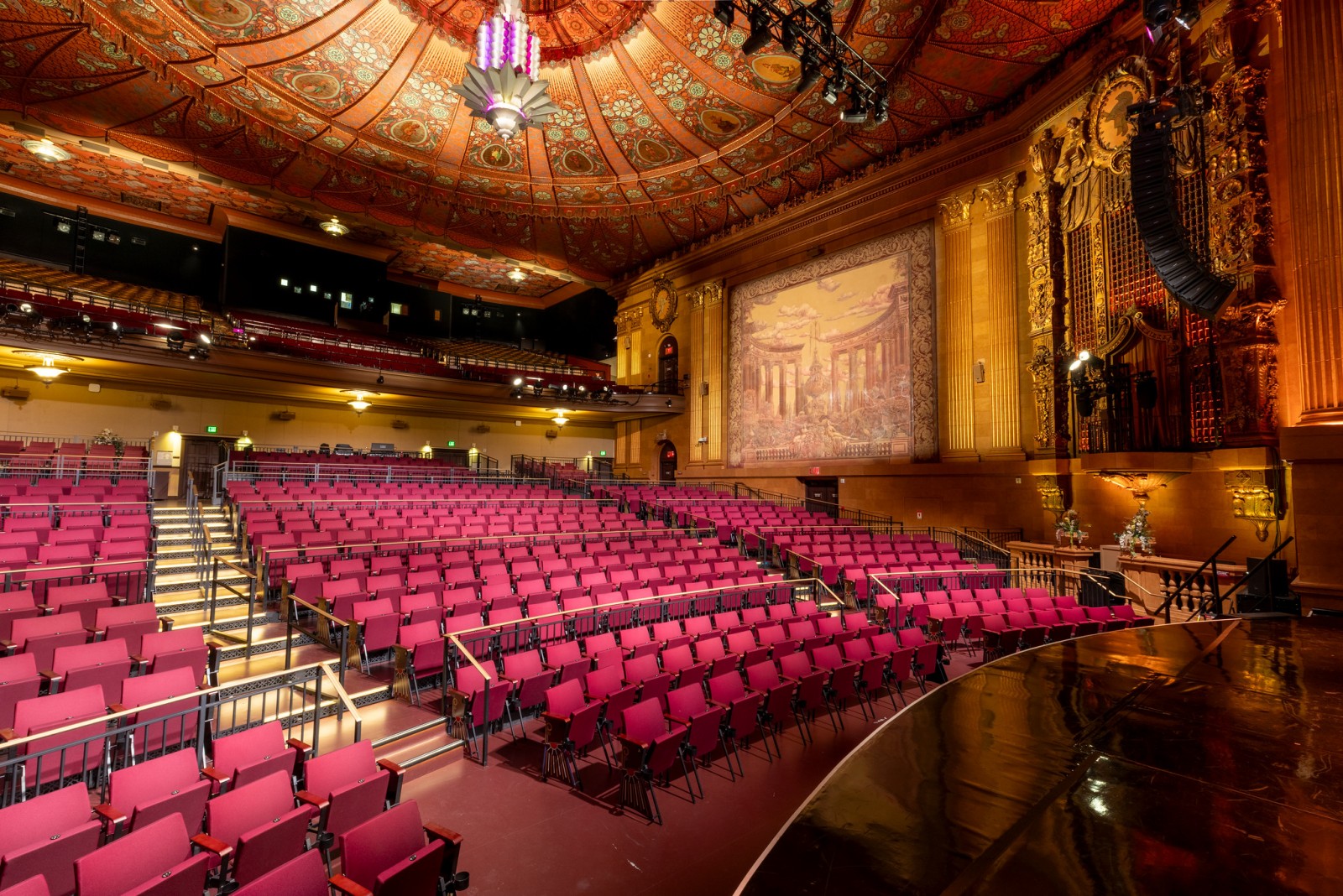
"One of the biggest developments that we brought to the table was a mobile screen, which opened up 50% of the stage," says Adam Shalleck, founder of The Shalleck Collaborative. "It's a little deeper than the thrust, but it narrows in to reveal beautiful Beaux-Arts plaster proscenium surrounds. The ask was to make the stage viable for live performances. They've done things like sing-along Rocky Horror Picture Show performances, but they were limited to the apron in front of the proscenium. We were hired to make the stage viable for full-stage performances of music, comedy, and all sorts of programming."
The other big request: "A venue that could change between a standing and seated environment, which equaled or exceeded the prior experience of the cinema in terms of sightlines and a sense of connection to the screen."
Shalleck's firm also handled the revised seating plan. Coming into the auditorium, says Jedd de Lucia, a Shalleck principal, "There was no landing and a long, non-accessible slope down to the front." The solution was a movable floor system that allows the space to transition between traditional tiered seating in rows to flexible standing-room concert configurations. Mindful of the theatre's landmarked status, he adds, "We built the transforming floor system on top of the historic sloped floor, preserving it and creating standing-room areas and risers that improve the sightlines overall and increase wheelchair accessibility through the venue. In full deployment mode, the rear row is still underneath the balcony but higher than it was. And the sightlines are significantly better."
Shalleck adds that the tiered risers supporting the seats (supplied by Series Seating) can retract beneath the "terraced standing room levels, which can also be used for banquets" or other events.
Regarding the organ, Shalleck says, "We gave it a safer, longer travel lift. Before, when the screen was downstage, the organ traversed a giant hole. But we needed that stage space, so we added a slip stage." When the organ is summoned, the slip stage cracks/retracts, allowing the organ to rise. "As the organist's number reaches a climax, he hits a button and descends as he finishes."
Shalleck and de Lucia note the importance of the structural steel added by MAR Structural Design. In addition, de Lucia says, "We provided steel behind the stage as well as rigging for the screen and some attachment points for cinema speakers. We also put in steel support positions as well as rigging points for the full rig, plus additional work if they need it."
Shalleck adds, "Bruce Veenstra, a principal from our office, braved the old attic and spent a great deal of time coordinating the entire team's overhead, stage, and seating elements throughout construction, often crawling in the limited space over the stage between the roof and the delicate, historic Beaux-Arts plaster surround that was in place on the stage."
Theatre Equipment and Rigging
Many changes mentioned above were designed and/or installed by Protech. Some were unexpected. Will Brants, the company's CEO, says, "We're not a telescopic seating company at all. But they searched the world trying to find a telescopic seating system, and everyone turned them down. The primary limiting factor was that they only had a maximum of 6" between decks; everyone told them it had to be higher. One of our engineers did some sketches, and we built a proof-of-concept prototype. We do quite a bit of collaborative design/build, which keeps theatre consultants involved, so we don't surprise anyone with our ideas."
The key to making the telescopic system work within the 6" limitation, Will says, involved "designing a drive system that could fit in that compact space. Originally, it was fully automated with a closed-loop drive system. Somewhere along the way, APE asked if we could make it work manually."
"We built another prototype with high-end guides, rails, fixtures, and fasteners, and it was super-smooth. Instead of having singular long-tiered curved rows, we broke them up into 20 modular sections: seven each on two rows and six on one row." This modularity allows for multiple seating configurations, including flat spaces for VIP areas, variable mix positions, etc. Ultimately, it can be manually converted as a one-man operation. Those savings, he adds, financed the supply installation of the organ lift and sloat designed by Shalleck.
Regarding the organ lift, Will says, "The organist has a dead-man button, but the operator in the projection booth triggers the organ." The lift system is another Protech creation, says Tanner Brants, automation and controls manager. "We used Gala Spiralifts, and we have a custom organ lift mechanism plus the automated slip stage; when the organ descends, and the slip stage pops back, it is perfectly level with the stage. It has to be perfect, because it creates a dance floor. Putting automated equipment in the middle of that floor was also a challenge. The automated slip stages and the lift have to be intelligent and communicate with each other, to avoid collisions. We use Beckhoff Automation's TwinSAFE system through EtherCAT. It has built-in function blocks that are SIL 3-compliant; they ensure that no collision can ever take place."
"Many times with a touchscreen operation station, you select a button, pushing 'up' or 'down,' 'open' or 'close'. Here, we need to visually communicate what state the machine is in. We have an animated HMI [Human Machine Interface] showing the locations of the top of the lift in real time. It runs on Python, with a script we wrote."
Onstage, the theatre features a new movie screen from Strong MDI. "It has independent masking for both sides, top and bottom," Will says. "They can change the aspect ratio at the push of a button."
Another innovation involved stage masking. Instead of scenic legs, Will says that Protech installed acoustic banners because the main curtain track can't be used when the curtain is out. "We incorporated automated scenic rollers, two on each track, which travel and roll up and down to create the side masking legs. They can be stored in the ceiling." This means, he adds, "We can open up the stage, making a bigger performance stage" for large-scale concerts to dance presentations. In addition to its custom automation, Will notes that automated line sets and electrics onstage feature ETC Prodigy fixed-speed hoists. The custom ornate draperies were sewn and supplied by Stage Decorations and Supply.
Tanner adds, "All of our automation, including our software, is done in-house, which lets us customize this stuff. Very few of us do that anymore. Everyone has canned solutions. Our CTO, Rusty Mayhew, was the lead software developer on this project. He was with PRG and Siegfried and Roy back in the day, and he is absolutely brilliant."
Lighting
Ruben Markowitz, senior designer at Lightswitch, notes that the theatre's architectural lighting was refurbished by Phoenix Day, the firm that did the original fixtures in 1922.
"They cleaned and rewired them," he says, "and basically replaced them with regular sockets, bringing them back to their original functionality." For the large chandeliers, he says, "We took out the wiring and put in low-voltage color-changing RGB LEDs. They're pixel-controlled to do effects like rainbow flags." The lobby units use Philips bulbs, and the chandeliers feature Environmental Lights LEDs.
Markowitz notes the challenge of accommodating lighting positions in a landmarked space with little available room. Over the stage, he says, a space of about 6' contains "a motorized video screen, motorized main drape, motorized legs, motorized borders for the screen, plus the cinema audio system." At the front of house, "Two balcony rails were undersized. We replaced them with industry-standard lighting pipes and installed more units." Truss towers at the back of house offer additional positions.
The package includes Robe ESPRITES and Spiiders and CHAUVET Professional Color STRIKE Ms and Maverick Force X units. "The Juliet balcony positions in the house had to be under 6' tall," Markowitz notes, "and we wanted to fit a good amount of gear in there, so we use the Force Xs for sidelight, which looks really nice. We also have CHAUVET Ovation Rêve E-3 as Lekos; they handle the main front stage wash and also highlight some of the architecture, along with some Spiiders that highlight the ceiling."
Control is a complex affair: The architectural and lobby lighting is run on a Lutron Caséta 5A Smart Switch. "Within the theatre envelope," Markowitz says, "ETC Paradigm runs most of the architectural stuff. A Madrix system controls the chandeliers. And a grandMA3 runs the show rig. The show stuff goes through TMB gateways, and the architectural stuff goes through Luminex. They all talk to each other; a patch cable connects it all."
Markowitz adds that the architects and The Shalleck Collaborative "spent tons of time fitting architectural lighting, relay panels, and company switches in the three levels of Juliet balconies on either side. They did an extension to the building on the south side to house dressing rooms, which freed up space for us. But it was a lot of work. The theatrical distro lives on the third floor in a Juliet balcony, which is crazy high. So, we built a remote-control system for the company switch that lets you turn it on right from the ground level. We had to route all this through the architecture in a way that wasn't disruptive."
Overall, Markowitz says, "One of the biggest challenges was how to light the space with no overhead positions yet make it feel comfortable. We couldn't put any units in the ceiling, and we couldn't attach to any of the walls because there's no access. Obviously, we wanted to stay clear of the architecture. One solution was LED tape integrated into the risers. But when the risers retract for a standing show, we still need lighting. Protech built movable stairs with the same lights integrated into them; they can plug into power and DMX. It's an example of the coordination we had to have to get enough light."
Audio / Projection
The Meyer Sound system, supplied and installed by Ultra Sound, includes, for live performances, 12 LEOPARD M80 compact linear line array loudspeakers, eight LEOPARD compact linear line array loudspeakers, twelve 900-LFC low-frequency control elements, six LINA very compact linear line array loudspeakers, four UPQ-D1 full-sized loudspeakers, three ULTRA-X40 compact point source loudspeakers, and two GALAXY 816 network platforms. A Meyer cinema system has been installed for screenings.